How to build a tire pyrolysis plant?
The tire pyrolysis plant is to convert the waste tire to oil pyrolysis plant; it is a green tire recycling technology which is becoming more and more popular. Many countries are establishing the pyrolysis plant: For example, in Southeast Asian countries with mandatory recycling policies and large capacity gaps ( India, Malaysia, Thailand, Vietnam, Indonesia); mature markets in Europe and the United States with clear demand for high-value-added products (the United States, the Netherlands, Serbia); and some Latin American&African countries (Brazil, Mexico, Nigeria, Turkey) with surging car ownership but lacking tire recycling systems.
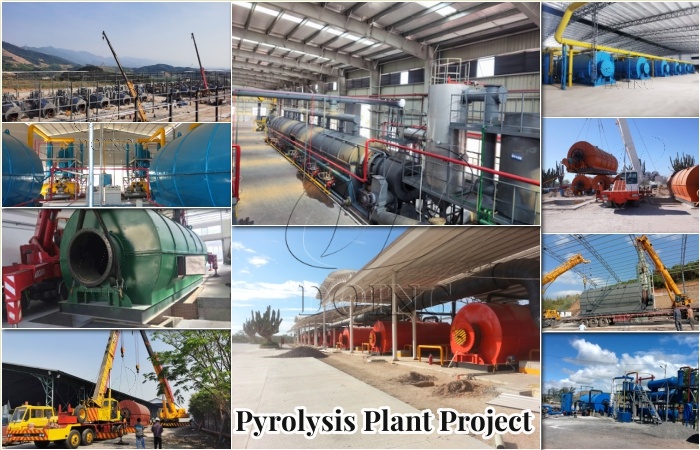 Tire pyrolysis equipment manufacturing projects in different countries
But building a tire pyrolysis plant involves far more than simply buying equipment. Established in 2011, DOING ECO—a professional manufacturer of waste tire pyrolysis machines with decades of experience—has helped clients in over 100 countries worldwide successfully set up waste tire recycling pyrolysis projects. We sincerely Suggest: Factors such as raw material supply, plant location, environmental compliance, equipment configuration, product sales channels, and daily operation all play a critical role in the long-term success of the tire pyrolsis project. The flow is as following about building a tire pyrolysis plant:
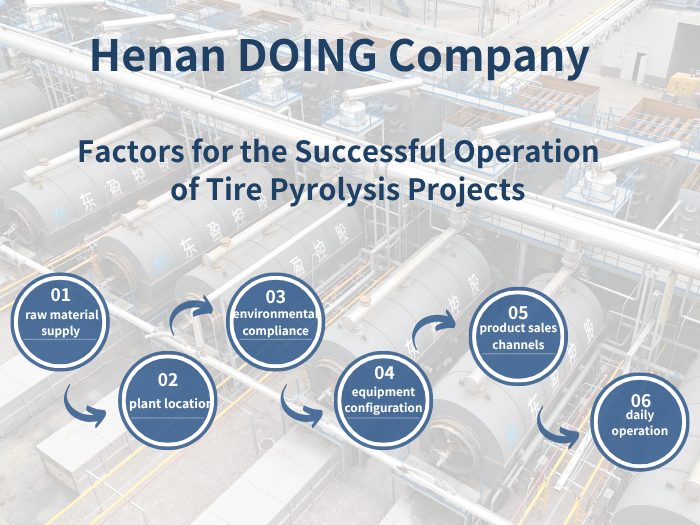 Six factors for the successful operation of waste tire pyrolysis projects
How to Build and Set Up a Tire Pyrolysis Plant?
1. Research the Tire Pyrolysis Plant Market and Project Feasibility
Before investing in a tire pyrolysis plant, carefully evaluate the commercial viability of the project in your local market. Key points to investigate include:
Local waste tire supply volume and purchasing prices
Potential buyers and current selling prices for pyrolysis oil
Market demand for recovered carbon black and steel wire
Local environmental regulations and emission standards
Land costs, utilities, and transportation conditions
Consider both operating costs and product markets before making an investment decision. Do not base the investment decision solely on the expected price of pyrolysis oil.
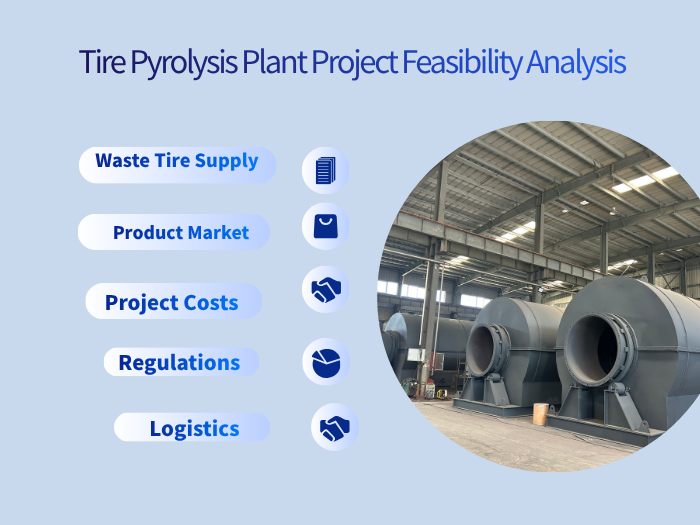 Factors of tire pyrolysis plant project feasibility
2. Secure a Stable Waste Tire Supply for the Pyrolysis Plant
A stable feedstock supply is the foundation of continuous and profitable operation. The raw material for waste tire pyrolysis plant is mainly waste tire, we should know price of waste tire. The tire can be divided into different kinds such as neylon tire, steel wire, and bicycle tire and so on. Before construction begins, establish reliable long-term relationships with tire collectors, scrap yards, tire dealers, or municipal recycling programs.
Consider the following factors carefully:
Daily available volume of waste tires
Purchase cost of tires
Transportation distance and logistics
On-site storage capacity
Need for sorting or pre-treatment
Without a stable tire supply, the plant may not operate at its full capacity.
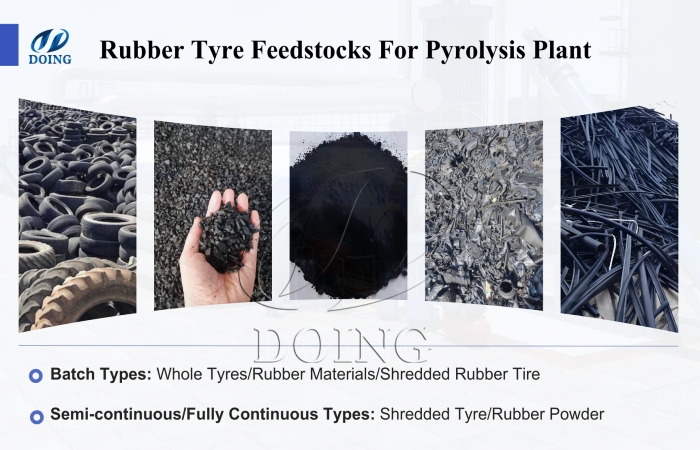 Different types of raw materials in tire pyrolysis projects
3. Choose a Suitable Location and Obtain Tire Pyrolysis Plant Permits
Select an industrial site that offers convenient transportation, reliable power and water supply, sufficient land area, and appropriate zoning.
Environmental compliance should be addressed at the earliest stage. Depending on the country or region, you may need an environmental impact assessment, emission permits, fire safety approval, and other local licenses.
Starting the permitting process early can help avoid costly delays and unexpected expenses later.
4. Select the Right Tire Pyrolysis Plant Equipment
Equipment selection is one of the most critical decisions in the entire project. Learn the machine and find supplier of the tire pyrolysis plant, we should learn about the oil yield rate, capacity of pyrolysis plant, and so on. Reactor design, the condensation system, automation level, safety features, and emission treatment directly affect oil yield, energy consumption, labor requirements, safety, and long-term operating expenses.
DOING ECO’s tire pyrolysis plants are engineered with the following advantages valued by customers worldwide:
1. Stable and high oil yield — Optimized reactor design combined with multi-stage condensation helps improve oil recovery efficiency.
2. Continuous operation — Fully continuous models support long-term 24/7 operation with automatic feeding and discharging.
3. PLC intelligent control — The automated system significantly reduces manual work and labor requirements.
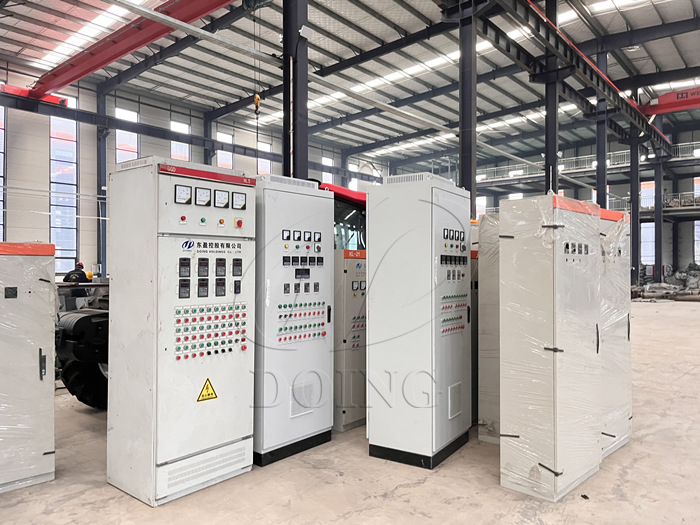 Safety control PLC system for tire pyrolysis equipment
4. Energy-saving design — Non-condensable gas is recycled as heating fuel after treatment, helping reduce external fuel consumption.
5. Enhanced safety and environmental protection — Reliable sealing technology, multiple safety protections, and multi-stage flue gas purification support safer operation and help meet applicable environmental requirements.
6. Durable reactor construction — High-quality boiler steel and automatic submerged-arc welding help extend equipment service life.
7. Flexible configurations — Batch, semi-continuous, and fully continuous models are available to match different capacities, feedstocks, and investment budgets.
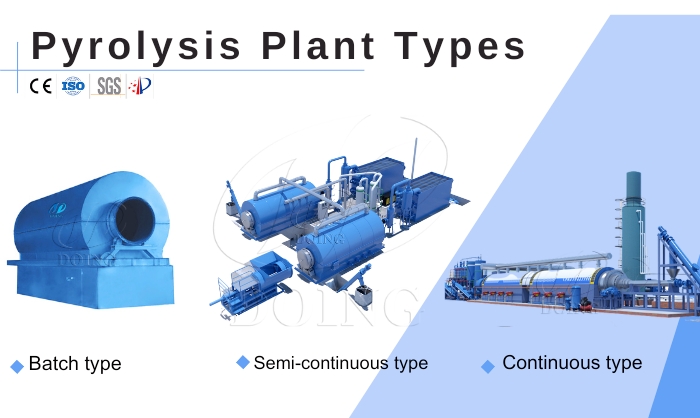 Different types of high-efficiency waste tire pyrolysis equipment
5. Complete Tire Pyrolysis Plant Installation, Commissioning, and Operator Training
Correct installation and thorough commissioning are essential to achieve the designed performance of the plant. The foundation, reactor, condensation system, gas treatment units, and electrical systems must be installed according to the technical drawings.
After installation, comprehensive trial runs should be conducted before full commercial production. DOING ECO provides installation guidance, commissioning support, and operator training through on-site or remote services.
Proper training ensures that operators understand safe operating procedures, process control, and routine maintenance.
 Comprehensive corporate services provided by DOING ECO
6. Establish Sales Channels for Tire Pyrolysis Plant Products
Identify potential buyers for pyrolysis oil, recovered carbon black, and steel wire before the plant begins full production.
Depending on local market conditions, pyrolysis oil can be sold as industrial fuel or further refined into non-standard diesel by waste oil refining machine, while recovered carbon black and steel wire can be supplied to relevant industrial users and recycling companies.
Establishing sales channels before production starts can help reduce inventory and improve cash flow.
Common Mistakes When Setting Up a Tire Pyrolysis Plant
Investors should pay special attention to the following common pitfalls:
Selecting equipment based solely on the lowest purchase price
Ignoring local environmental and safety regulations
Underestimating the importance of a stable waste tire supply
Failing to evaluate product markets before production start
Beginning operation without adequately trained operators
Choosing equipment that does not match the planned capacity or feedstock characteristics
A lower initial equipment price does not always mean a lower total project cost. Energy consumption, maintenance frequency, labor requirements, product yield, safety performance, and environmental compliance must all be considered when evaluating a tire pyrolysis plant.
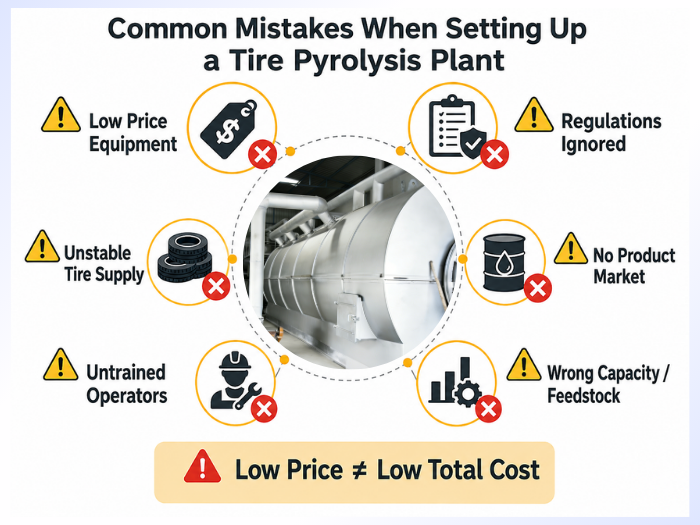 Common mistakes when setting up tire pyrolysis plant
Build Your Tire Pyrolysis Plant with DOING ECO
When feedstock supply, equipment selection, environmental requirements, and product markets are properly planned, a tire pyrolysis plant can become a viable and potentially profitable waste recycling project.
If you are planning to build a tire pyrolysis plant, please send us your target daily capacity, waste tire type, and project location. Our engineers will carefully evaluate your requirements and recommend a practical and reliable solution tailored to your needs.
contact us
- QWhat raw material do you plan to process?
- Rubber tire
- Waste plastic
- Oil sludge
- Biomass
- Waste oil
- Pyrolysis oil
- Not decided yet
- Other:
- QMachine daily processing capacity (tons of feedstock)
- 100kg-2ton
- 5-15ton
- 15-50ton
- >50ton
- Not decided yet
- QDesired final product and its primary applications